Take a quick look around our online magazine and you'll see we spend a lot of time talking about how you, as a speaker, can work for your audience. That's because it's important.
We also know from years of speaking to groups that you, as an audience member, can make a presenter better by the ways you respond.
Consider these choices you can make to support the speaker, signal your interest, and in the process contribute to a more interesting presentation, one you're more likely to enjoy.
While we're focused here on in-person presentations, you can carry over these ideas and the spirit of our suggestions to the virtual presentations and meetings you sit in on.
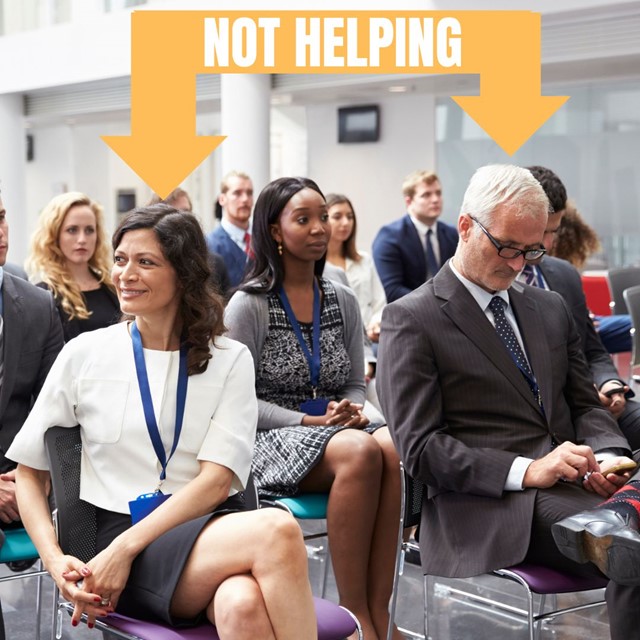
Put away electronics. Silence your phone.
When phones are handy, when laptops are open, it's hard to resist the pull to check on incoming notifications. Even for a dynamic speaker, this battle against constant distractions can be discouraging. For less confident speakers, it can feel like another reason to give up.
Give the speaker your focus by putting electronics aside, off the table when possible, out of your line of sight. Please, also, make a second check to see that you've silenced your notifications. It's jarring for everyone when a phone goes off in the middle of a presentation.
Take handwritten notes.
One reason people keep their devices open is to take notes. We encourage you to go with pen and paper (or maybe tablet and stylus) instead. Studies suggest people recall information better when they take handwritten notes. When we make notes for speaker feedback, we prefer to write them. It's easier to stay focused on the speaker when we do.
As speakers, we also feel better when see someone jotting down a note about what we're saying, rather than clacking away on a laptop keyboard.
Nod, smile, and respond nonverbally to the speaker.
In our public speaking coaching, we tell people to work hard for the audience. As an audience member, you encourage speakers to be more energetic and expressive when you respond with a smile, a nod, a facial expression that shows you hear and appreciate their work.
Our founder Reid Buckley, an accomplished and supremely confident speaker, always found unresponsive audiences his biggest challenge. He'd rather have rotten vegetables thrown his way, he said, than speak to the equivalent of the stone heads at Easter Island.
Avoid side conversations.
When you hear something in a presentation that sparks your thoughts, that's great. When you launch into a side discussion while the presenter is speaking, though, you make it harder for the speaker—and the rest of the audience--to keep their focus.
If you must comment to the person next to you, keep it short and quiet. Better yet, make a written note—either to share in the moment or to discuss later, after the presentation is concluded.
Look at the speaker.
We encourage speakers to make eye contact with individuals in the audience, another way they are working hard to engage you. Help them out by looking at them—rather than staring down at your knees, the tabletop, or off into space.
Participate when asked.
When a speaker asks for a show of hands or for your participation in an audience activity, try to shove down any skepticism and play along. We realize that not all audience engagement is equal. Some of it is excellent. Other times, activities can feel silly or gratuitous. But consider the speaker’s good intentions. Most presenters create these moments to make their message more interesting for you, so help them out!
Laugh, applaud, and show your appreciation.
If a speaker has put in the effort to bring humor to a talk, let them know you appreciate it. Laugh heartily. Encourage them to do more of what you enjoy with a response they can hear. Of course, you don't want to be so noisy you impede their progress. But you can use laughter and applause the way a trainer uses treats: Reward the speaker to reinforce the good stuff!
LEARN MORE
We also liked these ideas from Mark Wehner on how to be a better audience member.
Here's how longtime Buckley coach Karen Kalutz goes about supporting speakers when she's in the room.
Find our founder's thoughts on what makes a tough audience and how to prepare yourself for it.


